Wushu y el malentendido de “Kung Fu”
Wushu and the “Kung Fu” Misunderstanding
武术与“功夫”的误解
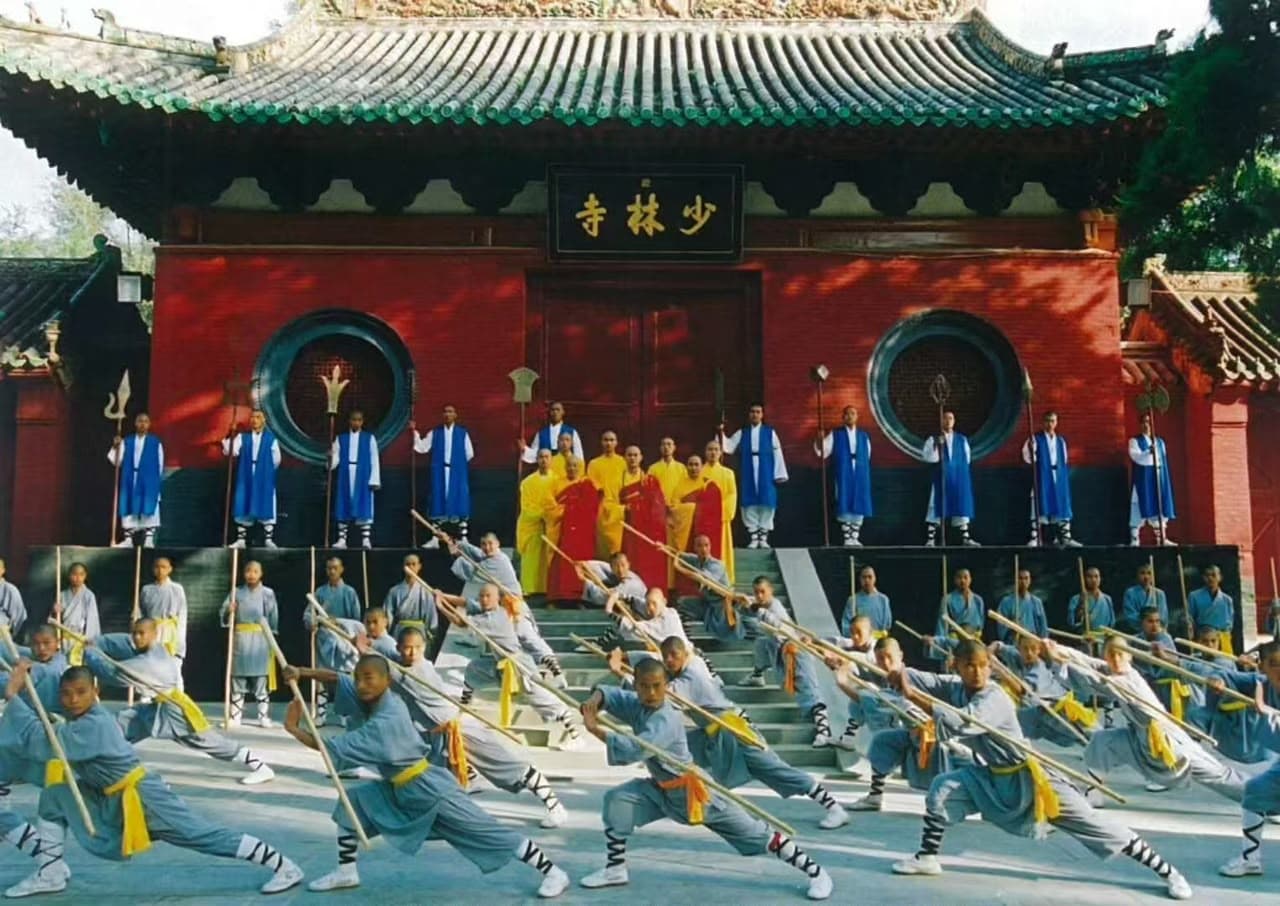
En idioma chino existe una sola palabra para designar las artes marciales chinas: Wǔshù(武术) — literalmente “arte marcial”. Wu(武)es militar o marcial; Shu(术)es arte, técnica o método.
In Chinese there is a single word for Chinese martial arts: Wǔshù(武术) — literally “martial art”. Wu(武)means military or martial; Shu(术)means art, technique, or method.
中文里,中国武术统称为武术(Wǔshù)。武为军事、武勇;术为技艺、方法。
En China no hay separación terminológica entre “Kung Fu tradicional” y “Wushu moderno”. Ambos pertenecen al mismo patrimonio. La diferencia es la finalidad del entrenamiento: el tradicional preserva estilos familiares, combate y filosofía; el deportivo fue estandarizado por el Estado chino para la competición desde mediados del siglo XX.
In China there is no terminological split between “traditional Kung Fu” and “modern Wushu”. Both belong to the same heritage. The difference is training purpose: the traditional path preserves family styles, combat, and philosophy; the sport form was standardized by the Chinese state for competition from the mid-20th century onward.
中国并不把“传统功夫”与“现代武术”当作两个不同术语体系——同属文化遗产。区别在于训练目的: 传统侧重家传、技击与哲学;竞技武术自二十世纪中叶起由国家标准化用于比赛。
Gōngfū(功夫) significa habilidad adquirida con esfuerzo, tiempo y disciplina — también en cocina, pintura o música. Cuando un chino habla de artes marciales, suele decir Wushu. “Kung Fu” se popularizó en Occidente por el cine de Hong Kong, Bruce Lee, Jackie Chan y Jet Li.
Gōngfū(功夫) means skill acquired through effort, time, and discipline — also in cooking, painting, or music. When a Chinese speaker talks about martial arts, they usually say Wushu. “Kung Fu” spread in the West through Hong Kong cinema, Bruce Lee, Jackie Chan, and Jet Li.
功夫(Gōngfū)指经努力、时间与纪律练就的造诣——亦可用于烹饪、绘画或音乐。 华人谈武术多说“武术”。“功夫”因港片与李小龙、成龙、李连杰等在西方走红。
Cómo salió de China
How It Left China
如何走出中国
El Wushu no se expandió primero por un programa gubernamental, sino por la inmigración china de los siglos XIX y XX. Con ella viajaron idioma, medicina, gastronomía, ópera, religión, asociaciones culturales… y artes marciales. Al inicio la enseñanza quedó casi reservada a la comunidad china.
Wushu did not spread abroad first through a government program, but through Chinese immigration in the 19th and 20th centuries. Language, medicine, cuisine, opera, religion, cultural associations… and martial arts traveled with it. At first, teaching remained largely confined to the Chinese community.
武术最初并非靠政府项目走出国门,而是随十九至二十世纪华人移民传播。同行的还有语言、医药、 饮食、戏曲、宗教与社团——以及武术。起初传授几乎仅限华人社群。
América Latina
Latin America
拉丁美洲
1840–1900: miles de chinos llegaron a Perú, Cuba, México, Panamá y Brasil para haciendas, ferrocarriles, minas y plantaciones. Trajeron Hung Gar, Choy Li Fut, Wing Chun, Mok Gar, White Crane, Tai Chi, estilos Hakka y sistemas del norte.
1840–1900: thousands of Chinese arrived in Peru, Cuba, Mexico, Panama, and Brazil to work on estates, railways, mines, and plantations. They brought Hung Gar, Choy Li Fut, Wing Chun, Mok Gar, White Crane, Tai Chi, Hakka styles, and northern systems.
1840–1900:大量华人抵达秘鲁、古巴、墨西哥、巴拿马与巴西,从事庄园、铁路、 矿山与种植园劳动。带来洪拳、蔡李佛、咏春、莫家、白鹤、太极、客家拳及北派系统。
1900–1970: crecieron asociaciones, templos y clubes; algunos maestros aceptaron alumnos no chinos. Todo seguía siendo tradicional; aún no existía el Wushu deportivo.
1900–1970: associations, temples, and clubs grew; some masters began accepting non-Chinese students. Everything remained traditional; competitive Wushu did not yet exist.
1900–1970:社团、庙宇与俱乐部壮大;部分师父开始收非华裔弟子。仍属传统体系, 竞技武术尚未成形。
1970–hoy: con la apertura de China llegaron equipos, entrenadores e intercambios. Surgieron federaciones nacionales vinculadas a la Federación Internacional de Wushu (IWUF).
1970–today: with China's opening, national teams, coaches, and exchanges increased. National federations emerged, linked to the International Wushu Federation (IWUF).
1970至今:中国开放后,国家队、教练与交流增多。许多国家成立联合会,并与国际武术联合会(IWUF)衔接。
El caso del Perú
The Case of Peru
秘鲁的情况
Perú tiene una de las comunidades chinas más antiguas de América Latina (desde 1849). Hoy conviven Wushu tradicional y Wushu deportivo (Taolu y Sanda). En ese tejido cultural se inscribe también la labor de promotores como César Napurí y el Instituto Peruano Chino (IPCH), puente entre idioma, cultura y artes marciales.
Peru has one of the oldest Chinese communities in Latin America (since 1849). Today traditional Wushu and competitive Wushu (Taolu and Sanda) coexist. Promoters such as César Napurí and the Peruvian Chinese Institute (IPCH) also build bridges between language, culture, and martial arts.
秘鲁拥有拉丁美洲最悠久的华人社群之一(自1849年起)。今日传统武术与竞技武术(套路、散打)并存。 马步里 塞萨尔与秘鲁华人学院(IPCH)等推动者,亦在语言、文化与武术之间搭建桥梁。
Europa y el resto del mundo
Europe and the Rest of the World
欧洲与世界
La gran expansión europea se consolidó tras 1950, con maestros llegados sobre todo desde Hong Kong, Cantón, Fujian y Shanghái hacia Inglaterra, Francia, Alemania, Italia, Países Bajos y España. En paralelo, el cine y más tarde las federaciones deportivas hicieron visible el arte ante audiencias globales.
Europe's major expansion took shape after 1950, with masters arriving mainly from Hong Kong, Canton, Fujian, and Shanghai to England, France, Germany, Italy, the Netherlands, and Spain. In parallel, cinema and later sports federations brought the art before global audiences.
欧洲的大规模传播在1950年后成形,名师多自香港、广东、福建与上海前往英、法、德、意、荷、西等地。 影视与后来的体育联合会,让武术面向全球观众。
El lugar de la Asociación
The Association's Place
协会的位置
Esta historia explica por qué hace falta una casa institucional: el talento viajó; la acreditación y la red global, no siempre. La Asociación Mundial de Wushu existe para organizar ese legado — tradición y deporte — con estructura contemporánea.
This history explains why an institutional home is needed: talent traveled; accreditation and global networks did not always follow. The World Wushu Association exists to organize that legacy — tradition and sport — with a contemporary structure.
这段历史说明为何需要机构家园:才华已远行,认证与全球网络却未必跟上。世界武术协会正是为 以当代结构组织这份遗产——传统与竞技——而存在。